Medical VR Simulations is a collection of immersive training modules focused on medical procedures and clinical
workflows. Developed for standalone VR devices, these experiences were designed to provide healthcare professionals
with scalable and repeatable training within realistic clinical environments. The modules were designed to support
procedural learning, collaboration, and efficient training workflows while maintaining strong usability and alignment
with customer requirements.
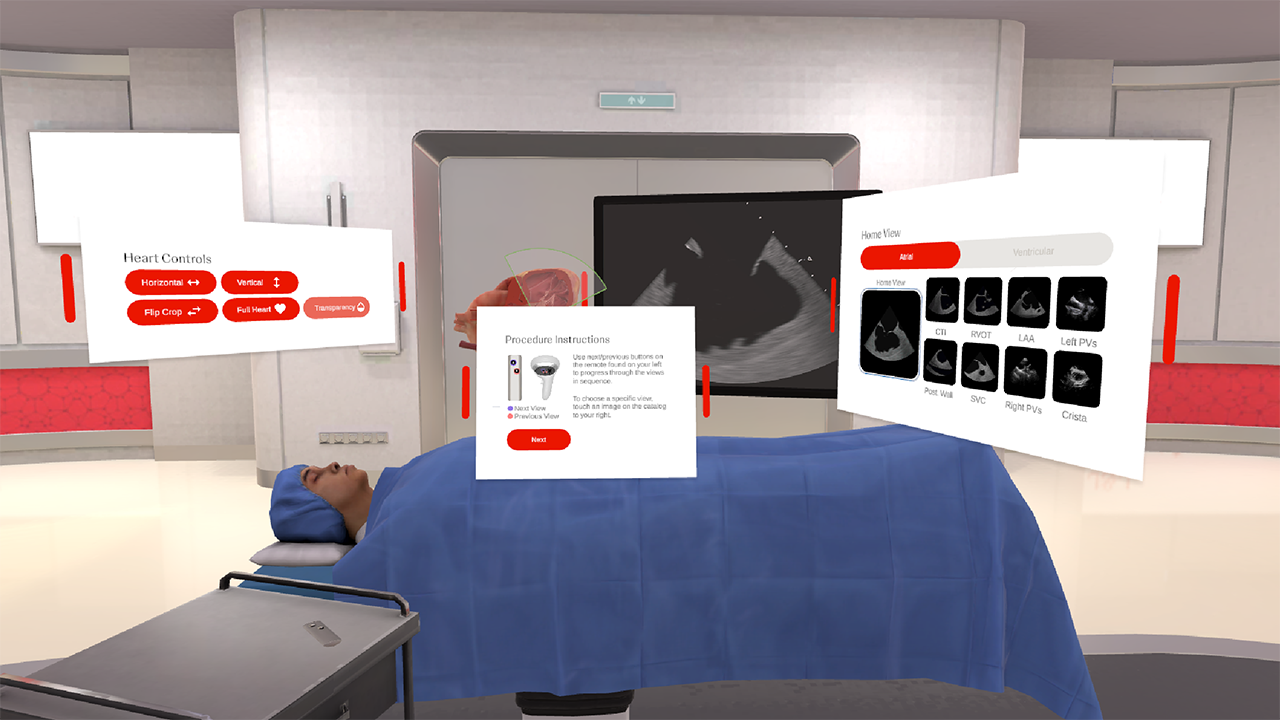
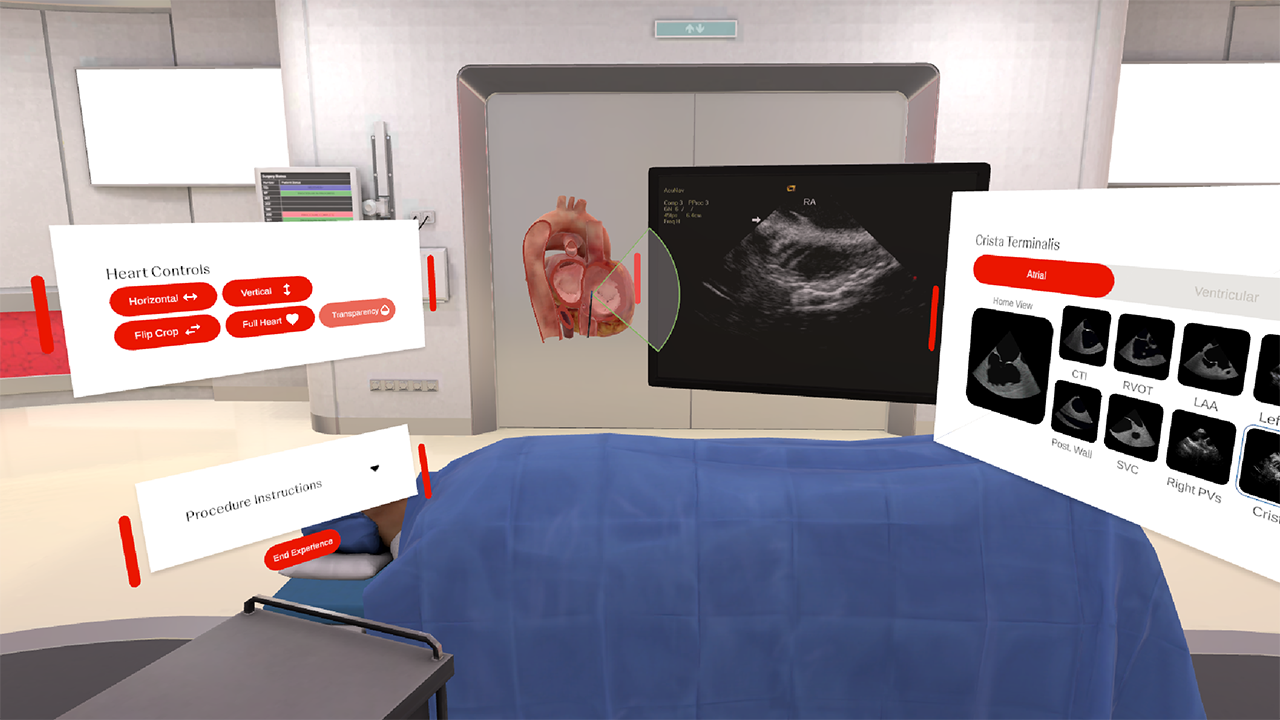
Guided exploration of cardiac imaging views and anatomical structures.
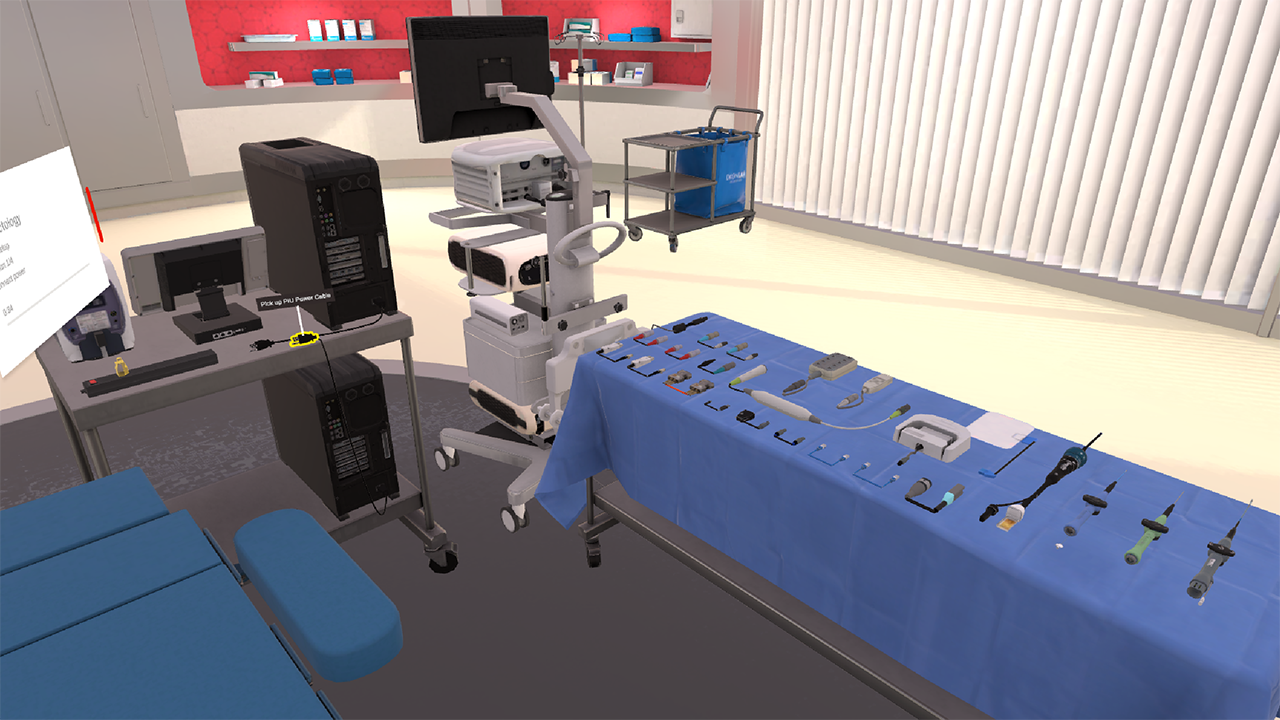
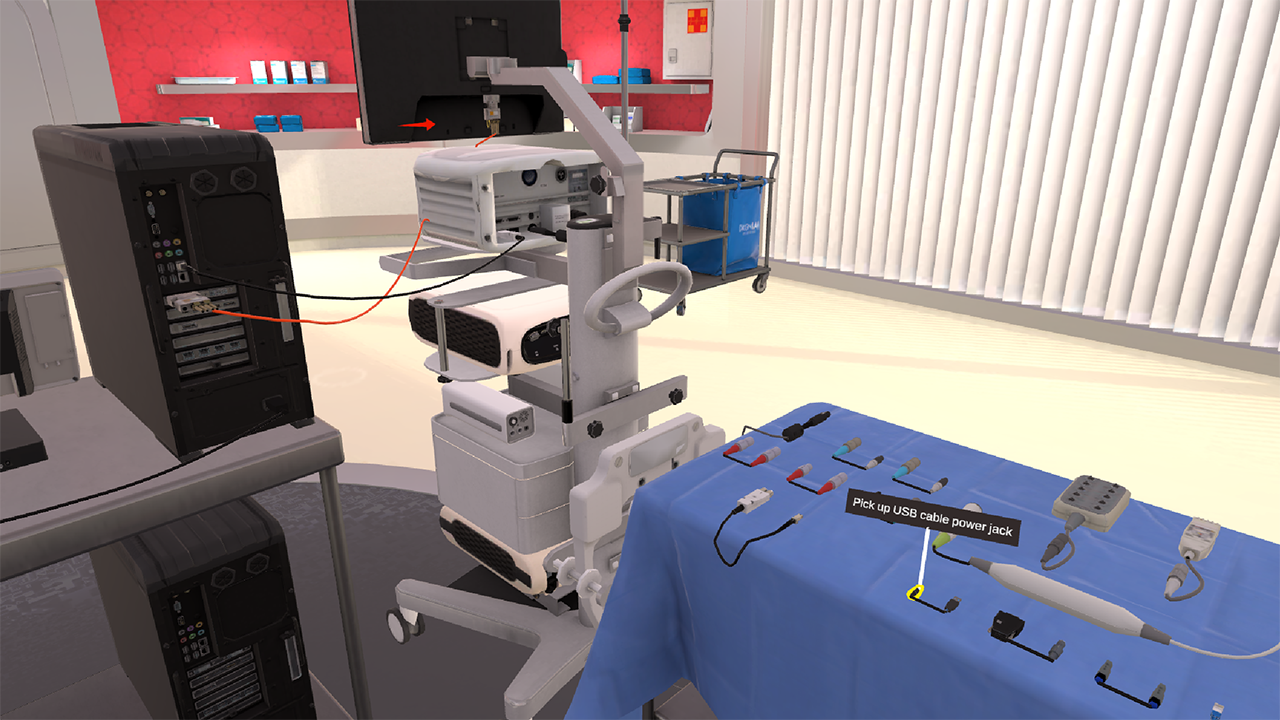
Assembly and connection of clinical devices and medical instruments.
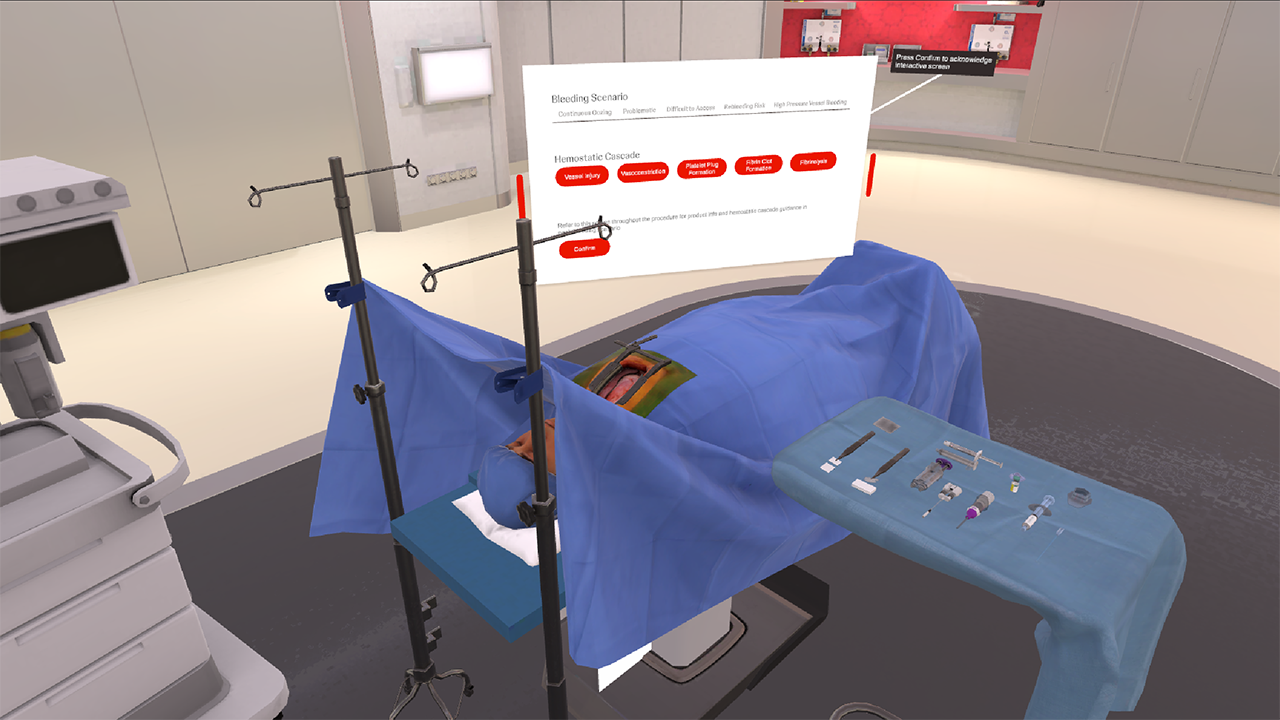
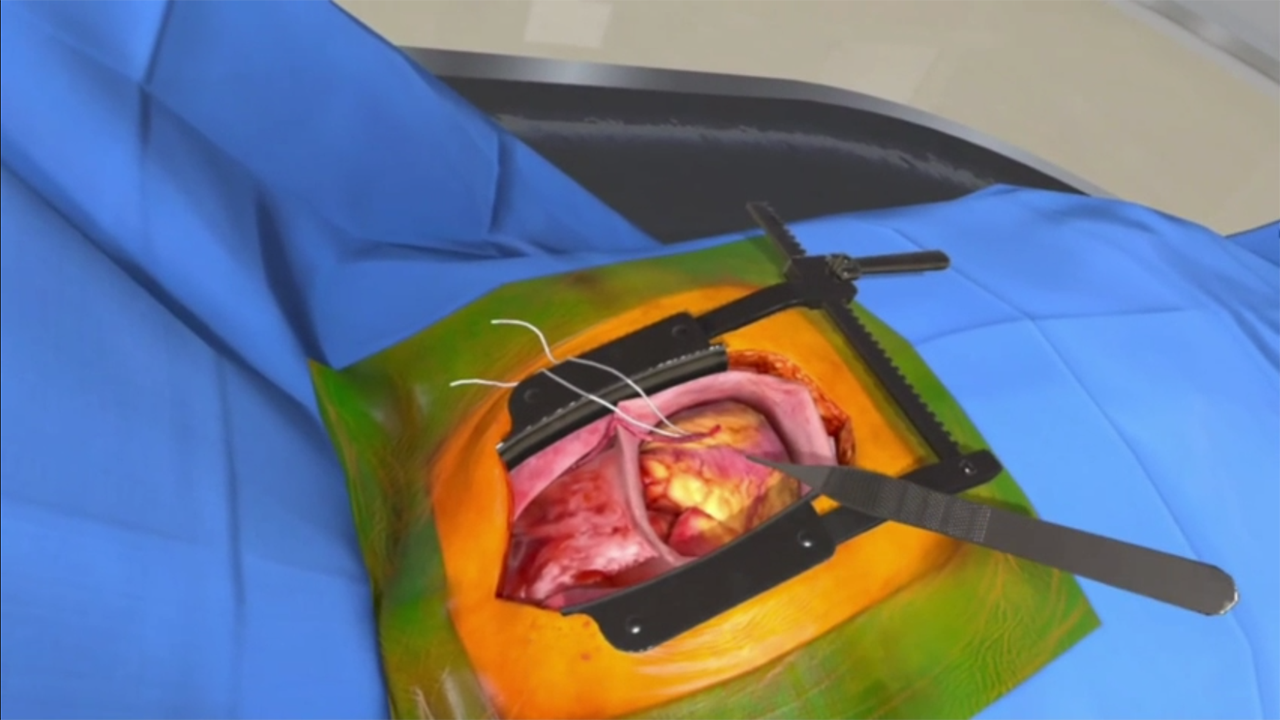
A simulated cardiac procedure designed to support surgical preparation and clinical decision-making.
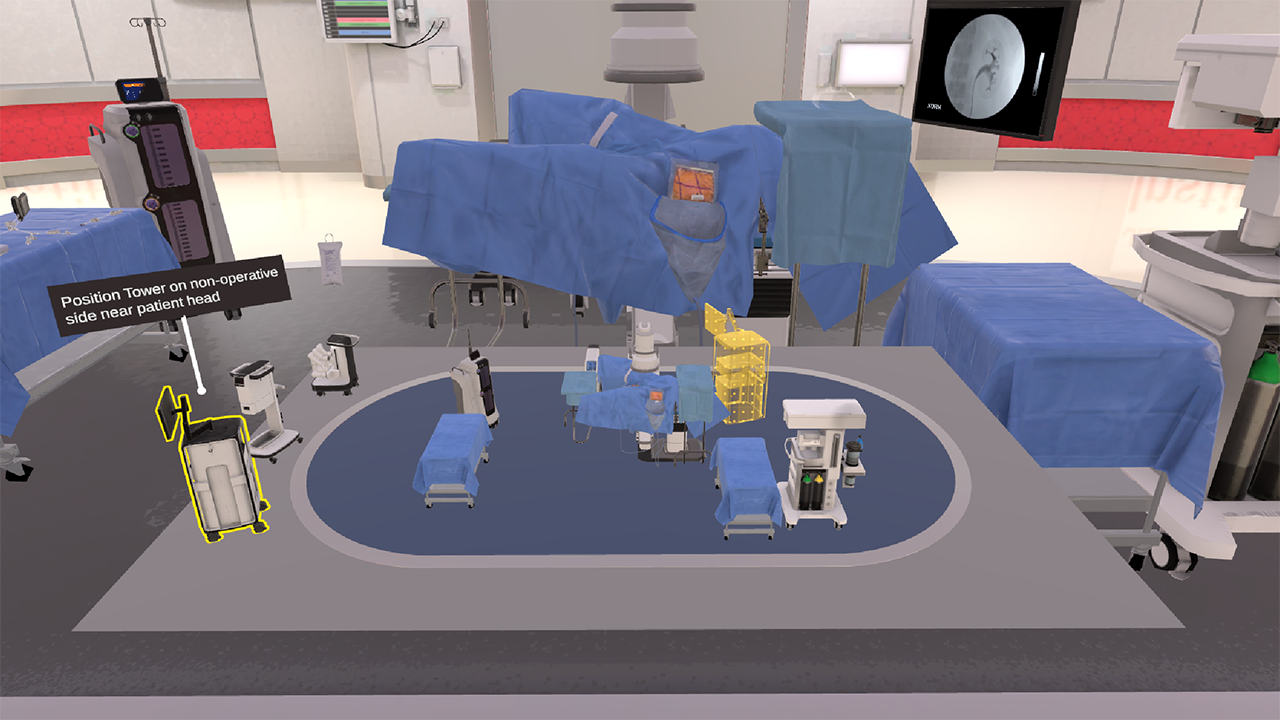
Equipment positioning, alignment, and preparation within the operating room.
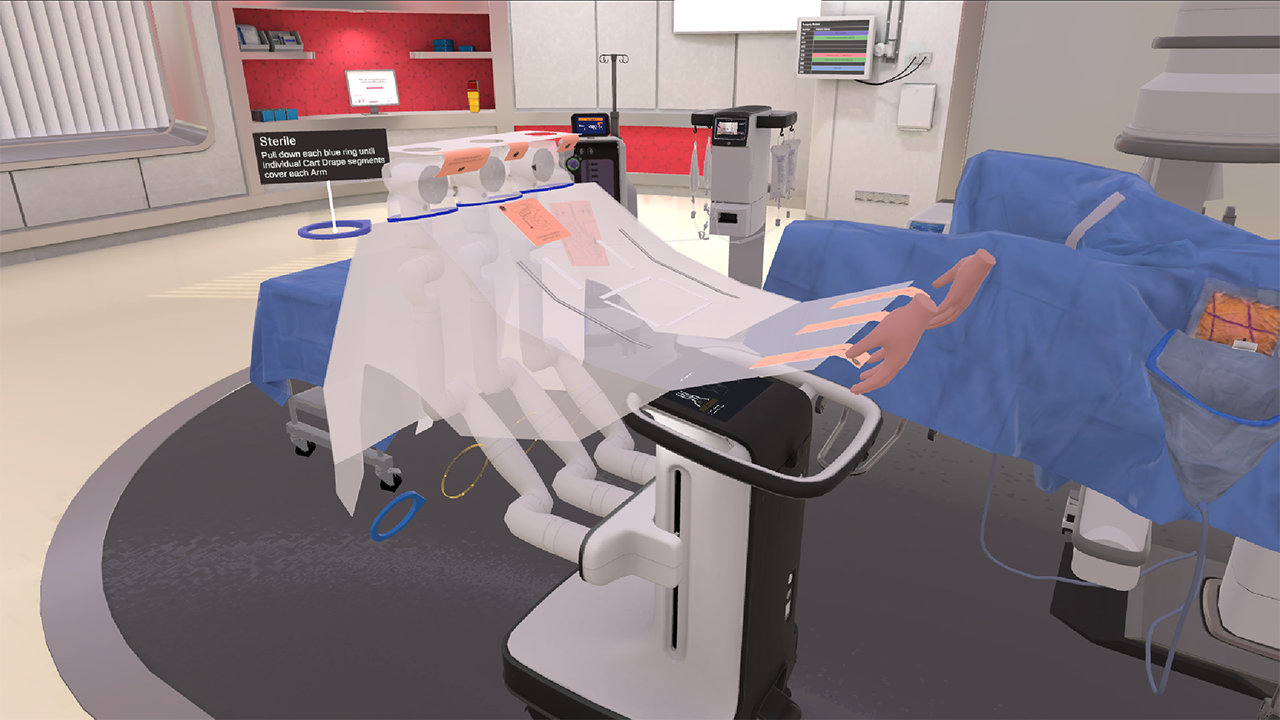
Sterile draping procedures and preparation of robotic-assisted surgical equipment.
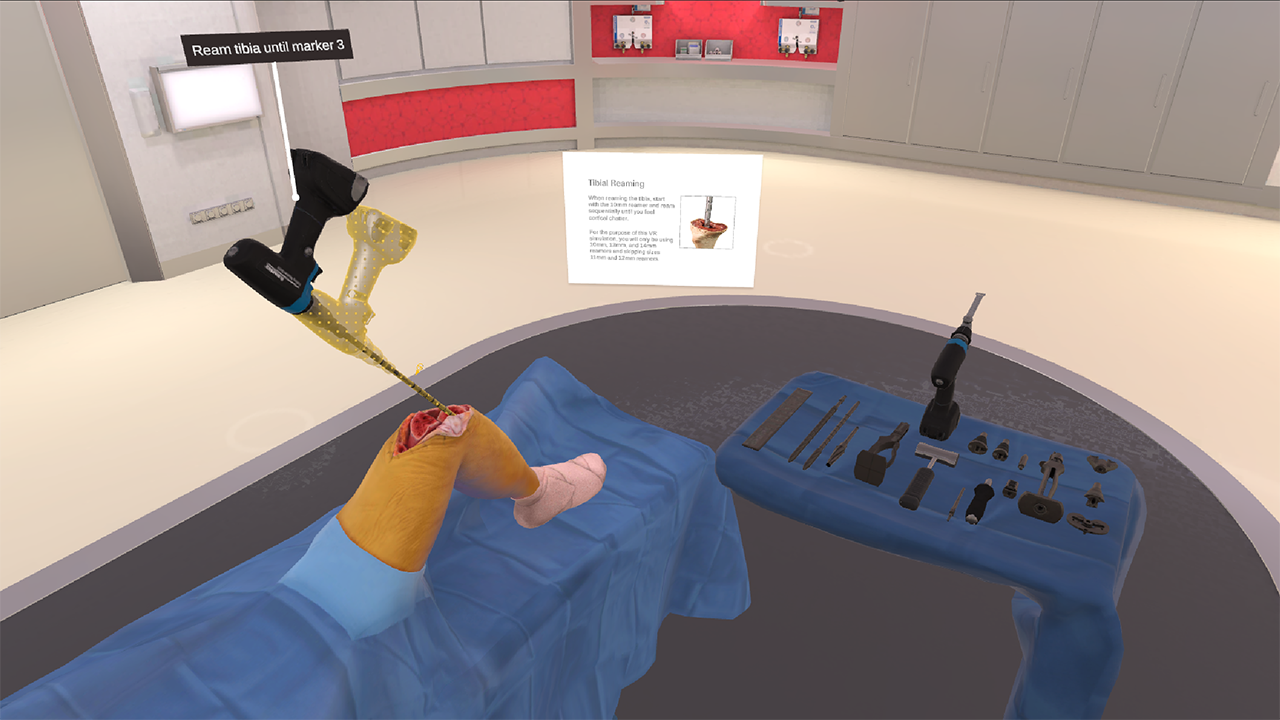
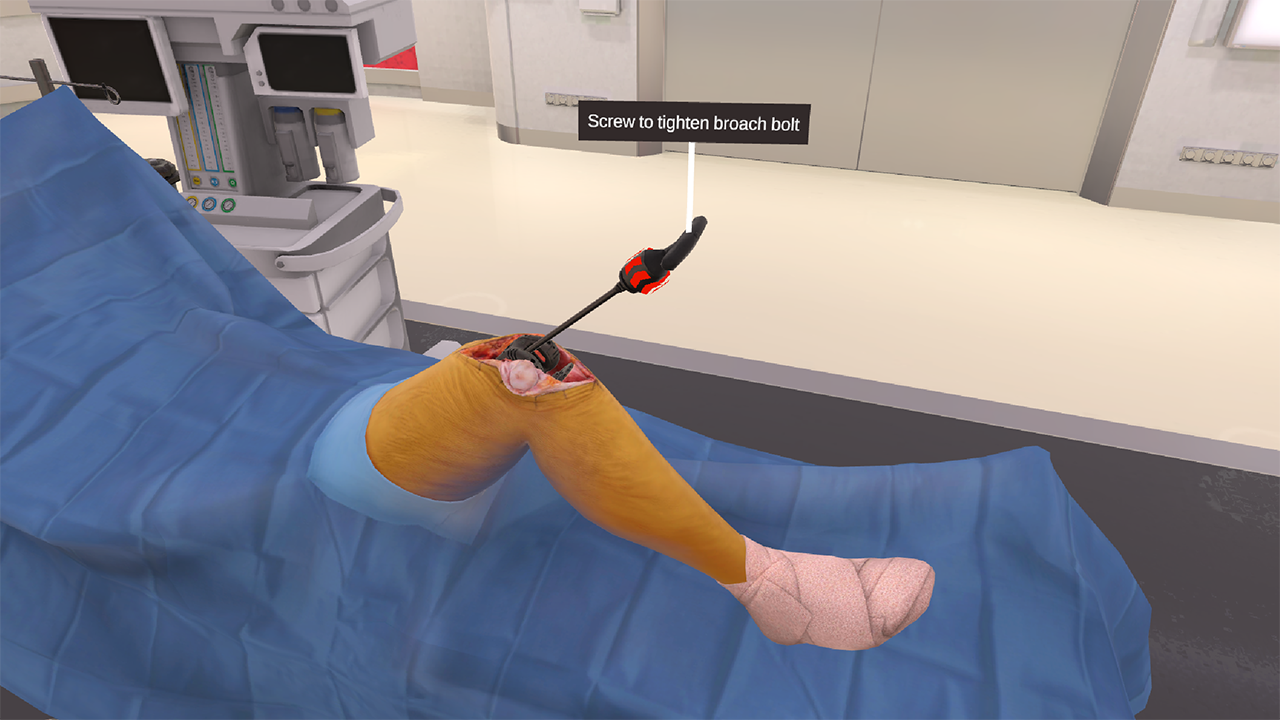
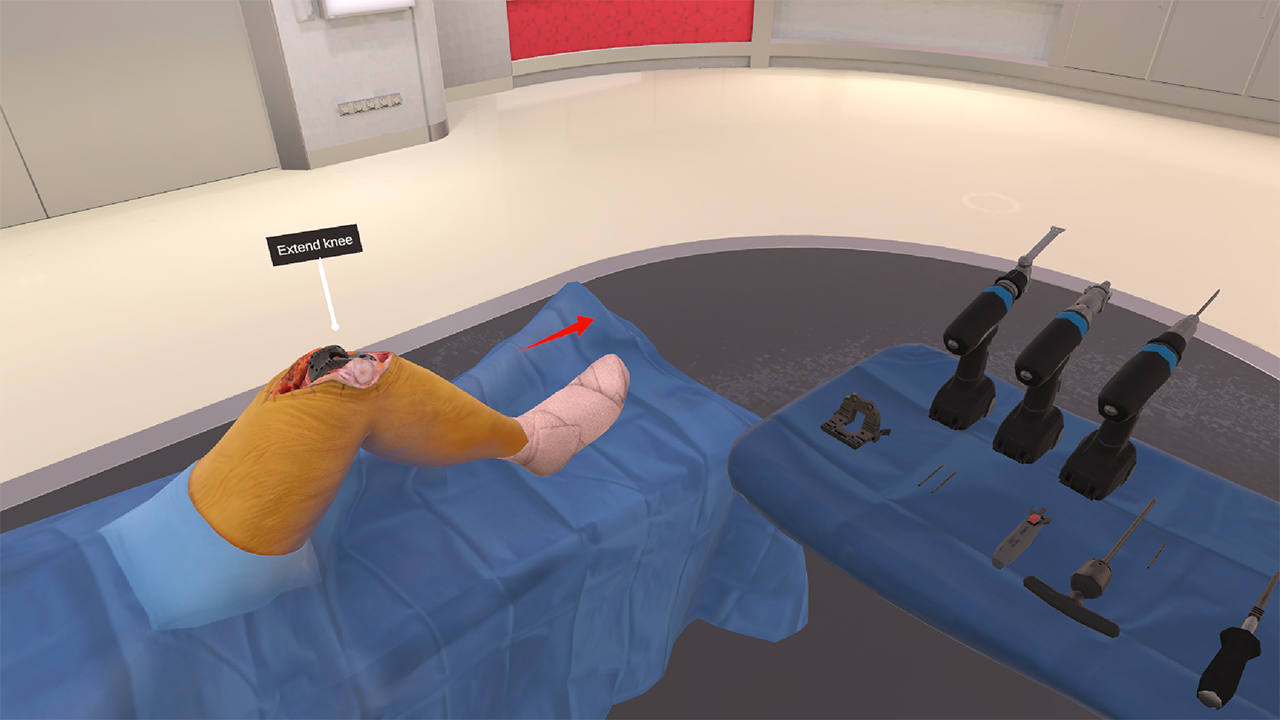
Guided workflows for knee replacement preparation, implant positioning, and surgical alignment.
Project Details
The modules were developed as multiplayer experiences that allowed users to collaborate during guided medical
procedures within realistic clinical environments. They supported both instructor-led and self-directed training,
allowing trainees to safely practise complex tasks without requiring physical equipment or facilities.
One of the key systems implemented across the modules was a proprietary workflow navigation feature using a virtual
smartwatch interface. This functionality enabled users and facilitators to skip procedural stages, revisit sections,
and move more efficiently through the training process during demonstrations and repeated sessions.
Analytics and tracking systems were integrated to support learner evaluation and performance monitoring. Multiplayer
synchronisation, procedural state management, and interaction systems were implemented to ensure reliable shared
experiences across connected users.
The modules were deployed on Meta Quest and Pico XR devices, requiring optimisation for standalone hardware while
maintaining responsive interactions and stable multiplayer performance.
Development
These training simulations were primarily developed using the Unity
engine and programmed using C#. Multiplayer functionality was
implemented using Fusion Networking, enabling synchronised
interactions between multiple users.
The modules were developed using SkillsVR’s proprietary Content Creation
Kit (CCK), which provided reusable systems and workflows for VR training development. Analytics and training
insights were supported through integrations with Cognitive3D, enabling interaction tracking and performance analysis.
Additional focus was placed on maintaining high performance for standalone VR devices such as Meta Quest and Pico XR. The development
process involved implementing custom procedural logic, synchronised workflow systems, reusable interaction mechanics,
and multiplayer state management tailored to customer requirements.
Team and Collaboration
The development process involved close collaboration with artists, project managers, QA testers, stakeholders, and
subject matter experts to ensure that each training module accurately reflected the required procedures and learning
outcomes. Working within tight production schedules required constant communication, rapid iteration, and close
coordination across multidisciplinary teams.
Key Responsibilities
VR Development: Developed and integrated medical procedure simulations using Unity and C#.
Multiplayer Systems: Implemented synchronised multiplayer interactions using Fusion networking.
Custom Logic: Developed procedural systems and reusable interaction mechanics.
Workflow Navigation: Implemented a virtual smartwatch system for procedural skipping and navigation.
Optimisation: Maintained stable performance for standalone VR devices including Meta Quest and Pico XR.
Testing and Debugging: Supported rapid iteration, troubleshooting, and QA feedback implementation.
Deployment Support: Assisted with integration and deployment processes for VR training environments.
Challenges
One of the primary challenges involved implementing multiplayer systems capable of satisfying complex customer
requirements while maintaining reliable synchronisation and performance across standalone VR hardware. Ensuring that
procedural states, interactions, and object behaviours remained consistent between connected users required extensive
testing and iterative refinement of networked systems.
Another major challenge involved balancing complex interactions with the hardware limitations of standalone VR
devices. Optimising scripts, networking behaviour, and workflows was essential to maintain smooth frame rates and
responsive user experiences.
Additionally, translating highly specific procedural requirements into intuitive interactions required continuous
collaboration with stakeholders, QA testers, and subject matter experts throughout development and testing phases.
The training modules successfully delivered scalable procedural learning experiences tailored to healthcare
environments. The simulations provided flexible training tools that supported collaborative learning, repeated
practice, and improved accessibility to procedural training.
This work strengthened my experience in multiplayer VR development, procedural system design, optimisation for
standalone hardware, and collaboration within multidisciplinary production teams operating under demanding delivery
schedules. The projects also deepened my understanding of how immersive technologies can support professional
training, engagement, and operational efficiency within clinical environments.